Kathmandu
📍 Nepal
☀️ Best: October–November & March–May 💰 $35–100
<h2>Kathmandu — Gateway to the Himalayas</h2><p>Kathmandu is the most remarkable city in the world for sheer concentration of UNESCO World Heritage Sites — seven in and around the valley, including the Boudhanath Stupa (one of the largest Buddhist stupas on earth), Pashupatinath Temple (Nepal's holiest Hindu site on the Bagmati River), and the old city centres of Kathmandu, Patan, and Bhaktapur. It is also the gateway to the Himalayas: the Everest Base Camp trek, the Annapurna Circuit, and Langtang are all accessed from the valley. And despite the inevitable tourist infrastructure, the city retains a raw, layered authenticity that makes it genuinely extraordinary.</p>
Kathmandu is the most remarkable city in the world for sheer concentration of UNESCO World Heritage Sites — seven in and around the valley, including the Boudhanath Stupa (one of the largest Buddhist stupas on earth), Pashupatinath Temple (Nepal's holiest Hindu site on the Bagmati River), and the old city centres of Kathmandu, Patan, and Bhaktapur. It is also the gateway to the Himalayas: the Everest Base Camp trek, the Annapurna Circuit, and Langtang are all accessed from the valley. And despite the inevitable tourist infrastructure, the city retains a raw, layered authenticity that makes it genuinely extraordinary.
October–November is Nepal's best trekking season — clear skies after the monsoon, extraordinary mountain views, and ideal temperatures (0–20°C depending on altitude). October is the most popular month globally for Everest Base Camp trekking.
March–April is the second best season — the rhododendrons bloom extraordinary crimson and pink at altitude, temperatures are warming, and the pre-monsoon clarity is excellent. Some altitude cloud builds by late afternoon.
December–February: Cold in Kathmandu (2–15°C), very cold at altitude, but the mountains are crystal clear and the city is uncrowded. The Losar (Tibetan New Year) festival in February is extraordinary in Boudhanath.
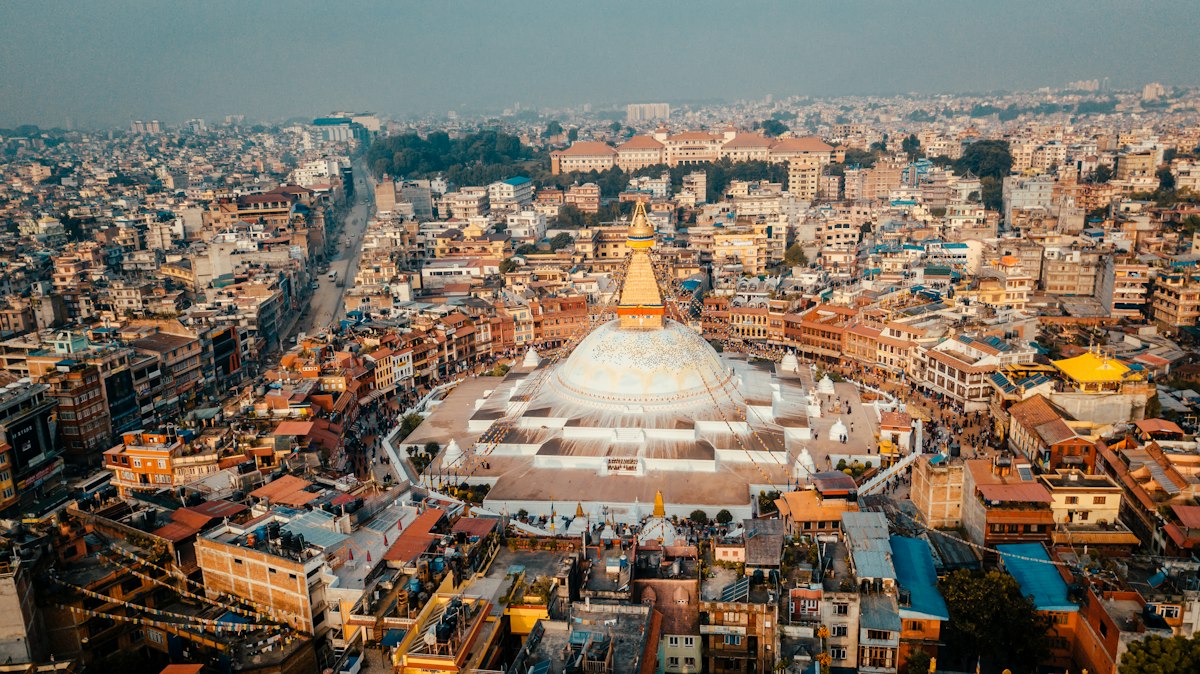
One of the largest spherical stupas in the world — 36 metres high, surrounded by Tibetan Buddhist monasteries, and circumambulated by monks in saffron robes spinning prayer wheels at dawn. The atmosphere at 6am, with incense smoke rising and monks chanting, is genuinely extraordinary. Free to walk the outer kora (circumambulation path); AUD $3 entry to the inner plaza. The rooftop cafés around the stupa offer an extraordinary bird's-eye view over breakfast.
Nepal's holiest Hindu temple on the banks of the Bagmati River — funerary ghats where Hindu cremations take place openly, sadhus (holy men) in orange robes, and centuries of accumulated religious intensity. Non-Hindus cannot enter the main temple but the surrounding ghats and forest are open. Entry AUD $10. The open cremations are approached respectfully — this is a deeply sacred space, not a tourist attraction.
The best-preserved medieval city in the Kathmandu Valley — a UNESCO World Heritage Site of extraordinary Newari architecture (pagoda temples, carved wooden windows, cobblestone squares) reached by microbus or taxi from Kathmandu (30 minutes, AUD $8). Entry AUD $15. Allow a full day — explore beyond the main square into the pottery district and weavers' courtyard.
The world's most famous trek — 14 days return from Lukla, reaching 5,364m at Everest Base Camp. Fly Kathmandu to Lukla (30 minutes, AUD $200–250 each way — the most dramatic airport approach in the world). Trekking permit: AUD $35. Guided trek with accommodation and meals: AUD $1,200–2,500 per person. Physical preparation and acclimatisation is essential — altitude sickness is the primary risk.
Kathmandu is safe for tourists. The significant risks are altitude-related: Kathmandu itself (1,400m) causes minor symptoms for some — give yourself 24 hours before flying to high altitude for trekking. Acute Mountain Sickness (AMS) is a serious risk above 3,000m — ascend slowly (no more than 500m gain per day above 3,000m), and descend immediately if symptoms worsen. Never ascend with AMS symptoms. The 2015 earthquake caused significant damage in the valley; most UNESCO sites have been restored but some areas remain in recovery.
Day 1: Boudhanath Stupa dawn. Pashupatinath afternoon. Day 2: Swayambhunath (Monkey Temple, 365 steps, panoramic views). Kathmandu Durbar Square. Patan Durbar Square and Patan Museum (best museum in Nepal, AUD $5).
Full day in Bhaktapur — Durbar Square, Taumadhi Square (Nyatapola Temple, 5-storey pagoda), pottery district, Tachupal Tole. Return for final Kathmandu evening.
Morning flight to Lukla for Everest Base Camp trek (book 4–6 weeks ahead in peak season). Or join a guided Langtang Valley trek (10 days, less crowded than Everest, equally beautiful).