Kyoto
📍 Japan
☀️ Best: March–April & October–November 💰 $150–350
<h2>Kyoto — Japan's Ancient Capital</h2><p>Kyoto was Japan's imperial capital for over a thousand years and retains a concentration of temples, shrines, traditional wooden machiya townhouses and geisha culture unmatched anywhere in the country. Where Tokyo is relentlessly forward-looking, Kyoto faces backward — and does so with extraordinary grace. The city has 1,600 Buddhist temples, 400 Shinto shrines, 17 UNESCO World Heritage Sites, and a dining scene that includes more Michelin-starred restaurants per capita than almost any city in the world.</p><h2>Getting There</h2><p>Kyoto is best reached by Shinkansen from Tokyo (2 hours 15 minutes, AUD $145 or JR Pass) or from Osaka (15 minutes, AUD $12). Kansai International Airport (Osaka) is the closest international airport — Haruka express to Kyoto takes 75 minutes (AUD $25). Direct flights from Australia to Osaka are available on Jetstar and Qantas, making a Kyoto-first itinerary very practical.</p>
The complete Kyoto guide for Australian travellers — the best temples, geisha districts, food, day t…
Hanami (cherry blossom viewing) season in Kyoto is one of the world's great travel experiences. Here…
Kyoto is Japan's cultural soul — 1,600 Buddhist temples, geisha districts, the Arashiyama bamboo gro…
Kyoto was Japan's imperial capital for over a thousand years and retains a concentration of temples, shrines, traditional wooden machiya townhouses and geisha culture unmatched anywhere in the country. Where Tokyo is relentlessly forward-looking, Kyoto faces backward — and does so with extraordinary grace. The city has 1,600 Buddhist temples, 400 Shinto shrines, 17 UNESCO World Heritage Sites, and a dining scene that includes more Michelin-starred restaurants per capita than almost any city in the world.
Kyoto is best reached by Shinkansen from Tokyo (2 hours 15 minutes, AUD $145 or JR Pass) or from Osaka (15 minutes, AUD $12). Kansai International Airport (Osaka) is the closest international airport — Haruka express to Kyoto takes 75 minutes (AUD $25). Direct flights from Australia to Osaka are available on Jetstar and Qantas, making a Kyoto-first itinerary very practical.
March–April (Cherry Blossoms): Kyoto's most celebrated season — Maruyama Park, the Philosopher's Path, and Arashiyama are extraordinary when the sakura bloom. Peak bloom typically lasts one to two weeks in late March to early April and is weather-dependent. Book accommodation 4–6 months ahead — this is the most in-demand period in Japan and Kyoto sells out first.
October–November (Autumn Foliage): The maple and ginkgo leaves turn from late October, peaking in mid-to-late November. The gardens of Eikan-do, Tofuku-ji and Arashiyama Bamboo Grove against crimson maples are extraordinary. Slightly less crowded than cherry blossom but still popular — book 2–3 months ahead.
June–July: Rainy season brings fewer tourists and lush green temple gardens. Gion Matsuri festival runs through July — one of Japan's three great festivals, with 34 elaborate floats paraded through central Kyoto. July 17 is the main procession.
December–February: Cold (3–10°C), occasionally snowing, and dramatically under-visited. Kinkaku-ji (the Golden Pavilion) covered in snow is one of the most extraordinary photographs in Japan. Accommodation prices drop significantly and the major temples are uncrowded.
Ten thousand vermillion torii gates winding 4km up Mount Inari — the most photographed site in Kyoto and one of the most recognised images in Japan. The full trail takes 2–3 hours return; the most dramatic sections are the first 30 minutes up. Go before 7am to experience the lower gates without crowds. Free entry, open 24 hours. 10 minutes from Kyoto Station by Nara line train.
The bamboo grove at Arashiyama (free, but go before 8am) is atmospheric and genuinely beautiful. The adjoining Tenryu-ji temple garden (AUD $8) is one of Kyoto's finest Zen gardens. Across the Togetsu-kyo bridge: Jojakko-ji temple on the hillside (AUD $5, extraordinary maple colours in autumn) and the Sagano Scenic Railway (AUD $10, runs through the Hozugawa gorge). Allow a full morning.
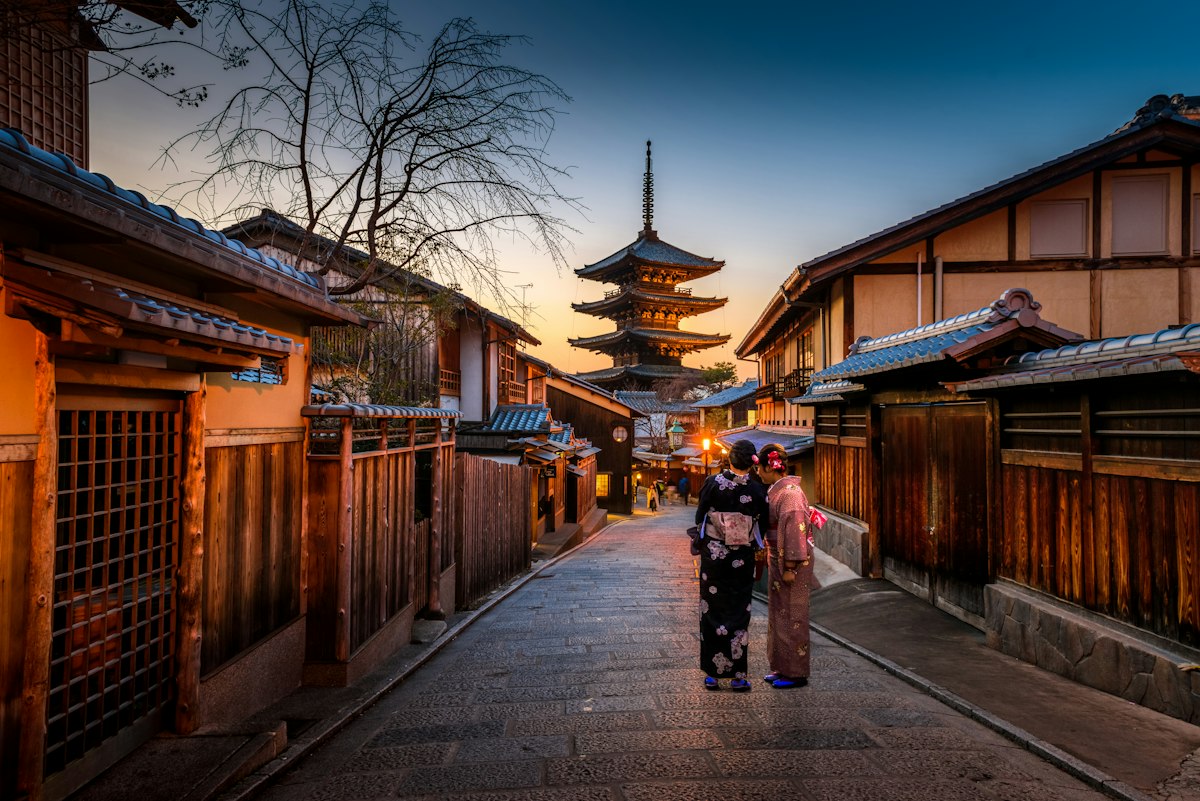
Kyoto's historic geisha district — the Hanamikoji district of traditional ochaya (tea houses) and machiya townhouses is most beautiful between 5–8pm when maiko (apprentice geisha) move between engagements. Photography should be respectful and from a distance; the locals have grown increasingly frustrated with tourist intrusion. The Gion Matsuri festival in July transforms the entire district.
A 2km stone-paved path following a canal between Ginkaku-ji (the Silver Pavilion) and Nanzen-ji temple. In cherry blossom season the overhanging sakura are extraordinary; in autumn the maples are equally beautiful. Free. Best walked north to south (Silver Pavilion to Nanzen-ji), ending at Nanzen-ji's famous aqueduct.
Kyoto's "kitchen" — a covered market running 400 metres through the centre of the city, filled with pickles, tofu, fresh fish, prepared foods, and sweets. The best place to graze through Kyoto's distinct food culture. Free to walk; budget AUD $15–25 for tastings and purchases. Lunch at one of the small stalls: fresh sashimi, grilled skewers, or tamagoyaki (sweet rolled omelette).
Kyoto is significantly more affordable than Tokyo, particularly for accommodation and food. The yen weakness in 2026 makes it extraordinary value for Australians.
Budget (AUD $80–130/day): Guesthouse or capsule hotel AUD $35–65/night, convenience store and ramen meals AUD $5–12, public transport AUD $3–8/day. Kyoto's major temples average AUD $5–8 entry each.
Mid-range (AUD $180–300/day): Boutique ryokan (traditional inn) AUD $100–200+/person including dinner and breakfast — this is Kyoto's signature accommodation experience and worth budgeting for at least one night.
Kyoto is exceptionally safe. The same Japan-specific cautions apply as Tokyo: carry cash, remove shoes in traditional spaces, eat quietly on public transport. Additional Kyoto-specific points:
Morning: Fushimi Inari Shrine (depart by 6:30am). Return to city. Afternoon: Kiyomizu-dera temple on the hill (AUD $5, spectacular views of the city) — arrive before noon to beat groups. Nishiki Market for lunch/snacks. Evening: Gion district walk at dusk — Hanamikoji Street at 6pm.
Morning: Philosopher's Path (Ginkaku-ji to Nanzen-ji). Lunch in the Okazaki museum district. Afternoon: Kinkaku-ji, the Golden Pavilion (go by 2pm before afternoon crowds). Ryoan-ji temple for Japan's most famous rock garden. Evening: kaiseki dinner (book ahead) or izakaya in Pontocho alley.
Early: Bamboo Grove before 8am. Tenryu-ji garden. Jojakko-ji on the hillside. Sagano Scenic Railway (10am departures). Lunch in Arashiyama. Afternoon: Ninnaji temple, Koryuji temple (earliest Buddha sculpture in Japan). Return via Nishiki Market. Onward to Osaka (15 minutes by Hankyu train, AUD $3) or stay one more night.