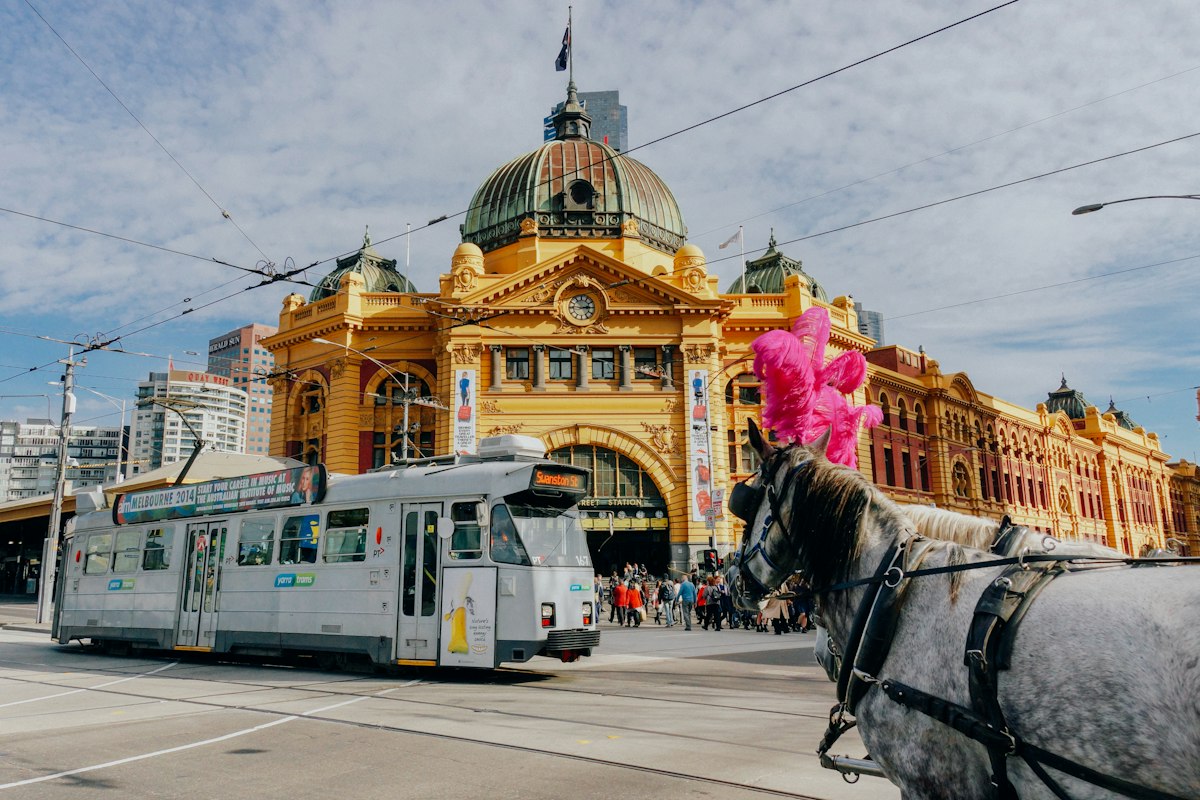
Melbourne
📍 Australia
☀️ Best: October–April 💰 $130–320
<h2>Melbourne — Australia's Cultural Capital</h2><p>Melbourne is the city Australians argue about most — Sydney versus Melbourne is a debate that will never resolve and reveals more about the debater than the cities. What is not arguable: Melbourne has Australia's best restaurant scene (driven by extraordinary immigration diversity), the best café culture (the flat white was arguably invented here), the best laneway art, the most interesting fashion, and the AFL Grand Final. It is also the gateway to the Yarra Valley wine region (45 minutes east), the Mornington Peninsula (90 minutes south), and the Great Ocean Road (3 hours west) — arguably Australia's most spectacular coastal drive.</p>
The Great Ocean Road is Australia's most spectacular coastal drive — 243 kilometres of clifftop road…
Victoria is home to dozens of stunning waterfalls that most tourists never discover. While the Great…
Melbourne is Australia's cultural capital — the world's best coffee culture, extraordinary street ar…
The Mornington Peninsula juts south of Melbourne into Port Phillip Bay and Western Port, and it pack…
Melbourne is the city Australians argue about most — Sydney versus Melbourne is a debate that will never resolve and reveals more about the debater than the cities. What is not arguable: Melbourne has Australia's best restaurant scene (driven by extraordinary immigration diversity), the best café culture (the flat white was arguably invented here), the best laneway art, the most interesting fashion, and the AFL Grand Final. It is also the gateway to the Yarra Valley wine region (45 minutes east), the Mornington Peninsula (90 minutes south), and the Great Ocean Road (3 hours west) — arguably Australia's most spectacular coastal drive.
Melbourne is famous for having four seasons in one day, and this reputation is not exaggerated — spring and autumn days regularly begin mild, heat to 30°C, then drop 15 degrees in an hour with a southerly change. That said: October–April (the warmer months) are generally the best for visiting. Summer (December–February) includes the Australian Open tennis (January, book tickets ahead) and the best beach weather on the Mornington Peninsula.
March–May (Autumn) is arguably Melbourne's finest season — the city's parks and suburbs turn extraordinary colours, the Formula 1 Australian Grand Prix runs in March, and the autumn harvest in the Yarra Valley begins.
Melbourne's laneway culture is one of Australia's most distinctive cultural exports. Hosier Lane (graffiti/street art, most famous, extremely photogenic), Centre Place, Hardware Lane, and Degraves Street — each is a world of independent cafés, bars, and galleries hidden between the CBD's major streets. Free to explore. Best in the morning or evening light for photography.
Australia's largest open-air market (Tue/Thu 6am–2pm, Fri 6am–5pm, Sat 6am–3pm, Sun 9am–4pm) — 600+ stallholders selling fresh produce, deli foods, clothing, and crafts. The deli hall (sheds G and H) is extraordinary for cheese, smallgoods, and international foods. Night market in summer (Wednesday evenings, December–February) is a Melbourne institution. Entry free; budget AUD $20–40 for buying.
Federation Square — the city's civic centrepiece by LAB Architecture Studio — houses the Ian Potter Centre (NGV Australia — free, Australian art from colonial to contemporary) and ACMI (cinema and digital culture museum). The National Gallery of Victoria International (across Swanston Street, free general admission) holds the best international art collection in Australia.
One of the world's great coastal drives — 243km of ocean road from Torquay to Allansford. The Twelve Apostles limestone stacks (Great Otway National Park) are the headline act. Allow 2 days minimum from Melbourne: overnight in Lorne or Apollo Bay. Spring (September–November) has the best wildflowers and fewer tourist coaches at the Apostles viewpoints. Hire a car or join a guided tour (AUD $100–180 per person for a day tour from Melbourne).
Melbourne is a very safe city. The CBD at night requires normal urban awareness. Flinders Street Station and nearby areas attract rough sleepers and occasionally aggressive behaviour late at night. Trams: validate your Myki card on every tram journey — inspectors are frequent and fines are AUD $290.
Morning: Queen Victoria Market. Laneways and café culture (Degraves Street, Centre Place). NGV International. Afternoon: Federation Square, Southbank riverside walk. Evening: Fitzroy or Collingwood for dinner.
Morning: St Kilda foreshore (Sunday Esplanade Market). Luna Park (free to enter for non-rides). St Kilda Botanical Gardens. Afternoon: Prahran Market (food shopping). Chapel Street for independent fashion. Evening: South Yarra or Richmond dining strip.
Self-drive or guided tour. Torquay Surf World Museum, Bells Beach (iconic surfing), Lorne for lunch, Apollo Bay overnight. Day 2: Cape Otway Lighthouse, the Twelve Apostles (go at sunrise before tour buses). Return via Colac and the Otway Ranges.